45-minute dinner
Sheet Pan Lemon Garlic Chicken and Potatoes
Golden potatoes, juicy lemon-garlic chicken, and crisp green beans share one pan in this easy 45-minute dinner with an estimated 36 grams of protein per serving.
Published · Updated

- Total time
- 45 min
- Serves
- 6
- Est. protein
- 36g
The recipe
Sheet Pan Lemon Garlic Chicken and Potatoes
Ingredients
- 1 1/2 pounds baby potatoes, halved
- 2 tablespoons olive oil, divided
- 1 1/2 teaspoons kosher salt, divided
- 1 teaspoon garlic powder
- 1 teaspoon dried oregano
- 1/2 teaspoon black pepper
- 6 thin chicken breast cutlets, about 2 pounds total
- 12 ounces green beans, trimmed
- 3 garlic cloves, minced
- 1 lemon, zested and juiced
Instructions
- Heat the oven to 425°F. Toss the potatoes with 1 tablespoon olive oil, 1/2 teaspoon salt, garlic powder, oregano, and black pepper on a large rimmed sheet pan. Roast for 12 minutes.
- Pat the chicken cutlets dry. Stir the remaining 1 tablespoon olive oil, remaining 1 teaspoon salt, minced garlic, lemon zest, and lemon juice together in a small bowl. Brush half of the mixture over both sides of the chicken.
- Turn the potatoes and push them to one side of the pan. Add the chicken and green beans, then drizzle the beans with the remaining lemon mixture.
- Roast for 15–18 minutes, until the thickest part of each chicken cutlet reaches 165°F and the potatoes are tender. Rest the chicken for 5 minutes before serving.
Food safety: Cook poultry to 165°F as measured in the thickest part. Refrigerate leftovers within 2 hours.
Leftovers: Refrigerate in a covered container for up to 3–4 days. Reheat the chicken to 165°F before serving.
What this dinner actually tastes like
This is a bright, savory roast dinner rather than a rich one. The lemon goes on twice — zest and juice in the garlic-oil mixture that coats the cutlets, and whatever juice collects on the pan — so the chicken tastes clean and citrusy rather than heavy. The potatoes are the opposite: starchy, browned on their cut faces, and seasoned with oregano and garlic powder that toast in the oven’s dry heat. The green beans land somewhere between the two, blistered in spots and still snappy.
It is worth being clear about what sheet-pan cooking does and does not give you. You are not going to get the deep crust of a seared cutlet in a hot skillet. What you get instead is even, hands-off roasting of three components on one surface, with the chicken juices and lemon mixture running down into the potatoes. That trade is the whole point on a Tuesday.
The staggered timing, and why it matters
The single most important instruction in this recipe is the 12-minute head start for the potatoes. Halved baby potatoes need roughly 28 to 32 minutes at 425°F to turn tender inside and golden underneath. Thin chicken cutlets need 15 to 18. Put them in together and you choose between chalky chicken and undercooked potatoes.
During that first 12 minutes, leave the pan alone. Potatoes release moisture early, and if you stir them at minute five you interrupt the contact between the cut face and the hot metal that produces browning. When you do turn them, turn them cut-side down again and push them to one side to open up space for the chicken and beans in a single layer.
Crowding is the other failure mode. A half-sheet pan (roughly 18 by 13 inches) fits this quantity. If your pan is smaller, use two and rotate them halfway through, or the vegetables will steam in their own moisture and stay pale.
Ingredient notes
Chicken cutlets. Buy thin-sliced breast cutlets, or slice two large breasts horizontally yourself and even them out with a few taps of a heavy pan. Uniform thickness matters more than exact weight: a 1/2-inch cutlet next to a 1-inch one means one of them is wrong when the pan comes out. Thighs work too, but add about 5 minutes and expect a richer, less lemony result.
Lemon. Zest before juicing, always. The zest carries the oils that survive roasting; the juice mostly contributes acidity and a little steam. If your lemon is small, use one and a half — the mixture should be loose enough to brush, not a paste.
Garlic. Minced fresh garlic in the brushing mixture can scorch if it sits directly on the pan, which is why it goes onto the chicken and beans rather than the potatoes. The potatoes get garlic powder instead, which tolerates 30 minutes of dry heat without turning bitter.
Green beans. Trimmed whole beans hold up better than pre-cut pieces. Frozen beans will work but must be thawed and thoroughly patted dry, or they will flood the pan.
Three things that go wrong
- Wet chicken. Patting the cutlets dry takes ten seconds and is the difference between roasted and poached. Surface moisture has to evaporate before browning starts, and on a thin cutlet there is not enough cooking time for both.
- Guessing at doneness. Poultry is done at 165°F measured in the thickest part, and thin cutlets go from juicy to dry in about two minutes. An instant-read thermometer is the one piece of equipment this recipe genuinely rewards.
- Skipping the rest. Five minutes off the heat lets the juices redistribute. Cut immediately and they run onto the board instead of staying in the meat.
Make-ahead and leftovers
The lemon-garlic mixture can be stirred together up to two days ahead and refrigerated; bring it to room temperature so it brushes rather than smears. Potatoes can be halved a day ahead if you keep them submerged in cold water, then drained and dried thoroughly before oiling.
Leftovers keep three to four days covered in the refrigerator. Reheat the chicken to 165°F. The potatoes are better in a skillet or air fryer than a microwave, which turns their crisp edges soft. Leftover chicken sliced cold over salad with the same lemon dressing is arguably a better lunch than it was a dinner.
What to serve alongside
The pan is already a full plate, so additions should be light: a simple arugula salad, warm pita to mop up the lemony pan juices, or a spoonful of plain Greek yogurt loosened with lemon and salt. A dry white with some acidity — Vermentino, Sauvignon Blanc — matches the lemon without fighting it.
Questions people ask
Can I use bone-in chicken? Yes, but treat it as a different recipe: bone-in thighs need 35 to 40 minutes, so they go on the pan with the potatoes at the start and the green beans join for the last 15 minutes.
Do I need parchment? Not required, but it makes cleanup easier and slightly reduces browning on the potatoes. If crisp potato faces matter most to you, roast directly on oiled metal.
Can I double it? Use two pans on two racks and swap their positions halfway. Doubling onto one pan guarantees steaming.
Why 425°F and not hotter? At 450°F the lemon-garlic coating starts to scorch before the potatoes are tender. 425°F is the temperature where both the browning and the interior doneness land at the same time.
About the protein estimate36g per serving is an estimate based on standard ingredient data. Brands, substitutions, and portion sizes change the result. View the source.
More dinners like this
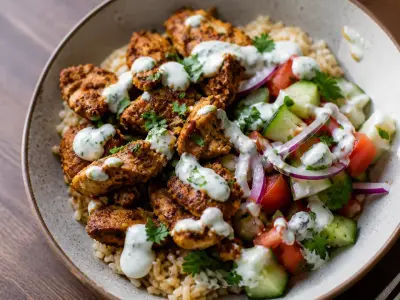
Chicken Shawarma Rice Bowls
Warm-spiced chicken, rice, cucumber, tomatoes, and lemon yogurt come together in easy shawarma-inspired bowls.
Get the recipe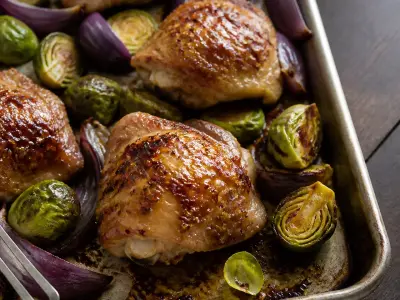
Maple Dijon Chicken and Brussels Sprouts
Maple-Dijon chicken thighs roast with Brussels sprouts and red onion on one sheet pan.
Get the recipe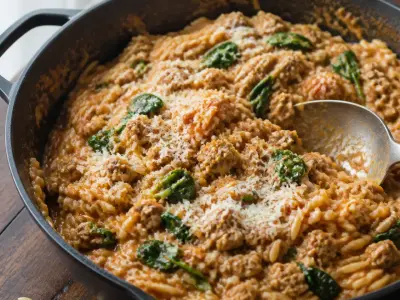
One-Pot Creamy Tomato Turkey Orzo
Lean ground turkey, tender orzo, spinach, and a creamy tomato sauce come together in one pot in 35 minutes with an estimated 32 grams of protein per serving.
Get the recipe