40-minute dinner
Maple Dijon Chicken and Brussels Sprouts
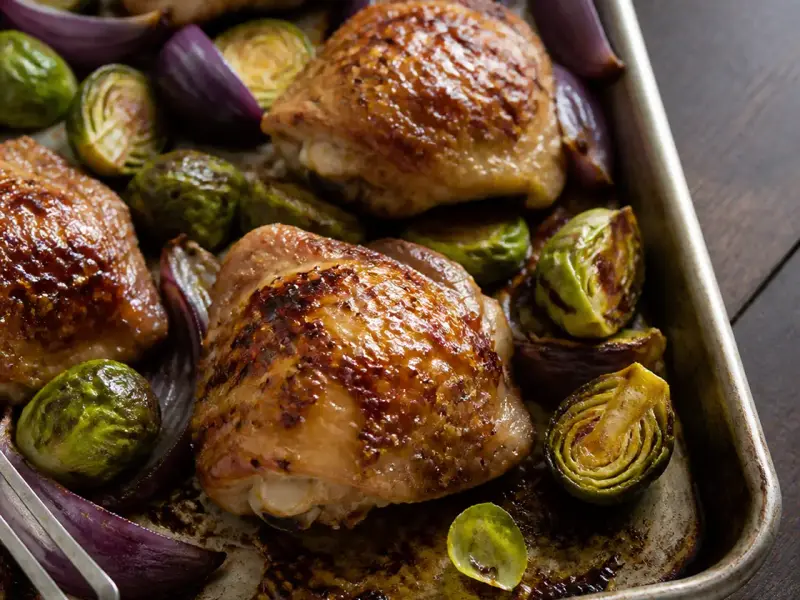
Maple-Dijon chicken thighs roast with Brussels sprouts and red onion on one sheet pan.
Published · Updated
- Total time
- 40 min
- Serves
- 6
- Est. protein
- 26g
The recipe
Maple Dijon Chicken and Brussels Sprouts
Ingredients
- 1 1/2 pounds boneless skinless chicken thighs
- 1 1/2 pounds Brussels sprouts, halved
- 1 red onion, cut into wedges
- 2 tablespoons olive oil
- 2 tablespoons Dijon mustard
- 1 tablespoon maple syrup
- 1 teaspoon garlic powder
- 1 teaspoon kosher salt
- 1/2 teaspoon black pepper
Contains: Mustard
Instructions
- Heat the oven to 425°F. Toss the Brussels sprouts and onion with olive oil, half the salt, and black pepper on a sheet pan.
- Stir the mustard, maple syrup, garlic powder, and remaining salt. Coat the chicken with the mixture and place it among the vegetables.
- Roast for 25–30 minutes, stirring the vegetables once, until the chicken reaches 165°F.
- Let the chicken rest for 3 minutes before serving.
Food safety: Cook chicken thighs to 165°F and avoid cross-contamination from the raw chicken.
Leftovers: Refrigerate in a covered container for up to 3–4 days. Reheat hot components to 165°F before serving.
Why maple and Dijon work on the same pan
Maple syrup and Dijon mustard are doing two different jobs, and the recipe only holds together because of the balance between them. The maple caramelizes on the surface of the chicken thighs and on the cut faces of the sprouts, giving that lacquered, slightly sticky exterior. The Dijon supplies acidity and emulsifies the glaze so it clings instead of sliding off, and its sharpness keeps the dish from reading as dessert-sweet.
The ratio in the recipe — two tablespoons mustard to one tablespoon syrup — is deliberately mustard-forward. If you have had a cloying maple-glazed chicken before, the cause was almost certainly the reverse ratio. Sweetness on a savory sheet pan should be a note, not the melody.
Brussels sprouts belong here because they are slightly bitter and very sulfurous when undercooked, and both of those qualities are tamed by browning and by sweetness. The same glaze on broccoli would be fine; on sprouts it is genuinely good.
Get the sprouts cut-side down
This is the technique that decides whether the dish is excellent or merely fine. Halve each sprout through the root, toss with oil and salt, then take thirty seconds to turn every half cut-face down against the pan. That flat surface in direct contact with hot metal is where the browning happens — the loose outer leaves crisp, the cut face goes deep golden, and the interior steams gently inside its own shell.
Sprouts tossed on randomly give you maybe a third of that surface contact. They still cook; they just taste boiled with brown edges.
Do not stir them more than once, and when you do, use tongs rather than a spatula so you can put them back down on their faces.
Thighs, not breasts
Boneless skinless thighs are specified for a reason. They finish in the same 25 to 30 minutes as halved sprouts, they carry enough fat to stay juicy under a sugar-containing glaze, and they tolerate the higher end of the doneness range. Breast meat under a maple glaze at 425°F is a race you usually lose: by the time the glaze has colored, the interior is past its best.
Thighs are safe and pleasant at 165°F, and unlike breast they stay good a few degrees beyond it. Check the thickest part of the largest piece, not the smallest.
If you only have breasts, cut them into 1 1/2-inch chunks, start the sprouts 8 minutes earlier, and add the chicken partway through.
Ingredient notes
Maple syrup. Real syrup, not pancake syrup, which is corn syrup with flavoring and burns faster. Grade A dark (formerly Grade B) has more character and stands up better to roasting than the pale, delicate grades.
Dijon. Smooth Dijon emulsifies the glaze. Whole-grain mustard tastes good but leaves the glaze loose and the seeds can scorch; if you want it, use one tablespoon of each.
Red onion. Cut into wedges through the root. Onion wedges collapse and sweeten as they roast, and they are the third flavor in the pan — without them the dish is just chicken and sprouts.
Salt. The glaze holds only part of the total salt; the rest goes on the vegetables directly. Salting the sprouts before roasting draws a little moisture to the surface, which evaporates early and then lets browning begin.
Where it goes wrong
Glazing too early. The mustard-maple mixture goes on the chicken, not on the sprouts at the start. Sugar on vegetables for a full 30 minutes at 425°F means burnt, bitter edges. If you want glaze on the sprouts, drizzle a little in the last five minutes.
A crowded pan. One and a half pounds of sprouts plus a pound and a half of thighs needs a full half-sheet. Two pans beat one packed pan every time.
Not resting the chicken. Three minutes is enough for thighs, and it keeps the juices in the meat rather than on the pan.
Leftovers and what to do with them
Refrigerate up to three to four days, reheating chicken to 165°F. Sprouts are best revived in a hot dry skillet, which re-crisps the leaves; microwaving makes them soft and noticeably more sulfurous.
The leftovers have an obvious second life: chop the chicken and sprouts, toss with cooked farro or wild rice, add a handful of dried cranberries and a splash of cider vinegar, and you have a grain salad that tastes deliberate rather than recycled.
Serving suggestions
Mashed potatoes or polenta catch the pan juices. For something lighter, a sharp apple and celery salad cuts through the glaze. An off-dry Riesling or a hard cider is a better match than a tannic red, which fights the mustard.
Questions people ask
Can I use frozen Brussels sprouts? Not well. They carry too much water and never brown; they turn khaki and soft. Fresh is worth the difference here.
My glaze slid off the chicken. Why? Either the chicken was wet when it was coated, or the glaze was too thin. Pat the thighs dry, and if your syrup is very runny, use a scant tablespoon.
Is there a lower-sugar version? Replace the maple with a tablespoon of apple cider and a half teaspoon of honey. You lose some lacquer but keep the balance.
What size pan? A rimmed half-sheet, roughly 18 by 13 inches. Rimmed matters: the pan gives off juices you do not want on the oven floor.
About the protein estimate26g per serving is an estimate based on standard ingredient data. Brands, substitutions, and portion sizes change the result. View the source.
More dinners like this
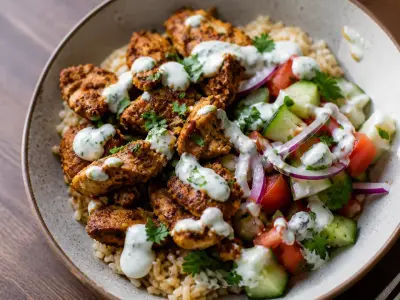
Chicken Shawarma Rice Bowls
Warm-spiced chicken, rice, cucumber, tomatoes, and lemon yogurt come together in easy shawarma-inspired bowls.
Get the recipe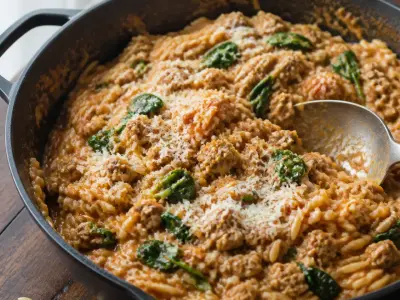
One-Pot Creamy Tomato Turkey Orzo
Lean ground turkey, tender orzo, spinach, and a creamy tomato sauce come together in one pot in 35 minutes with an estimated 32 grams of protein per serving.
Get the recipe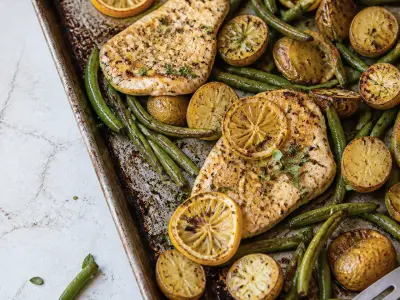
Sheet Pan Lemon Garlic Chicken and Potatoes
Golden potatoes, juicy lemon-garlic chicken, and crisp green beans share one pan in this easy 45-minute dinner with an estimated 36 grams of protein per serving.
Get the recipe