30-minute dinner
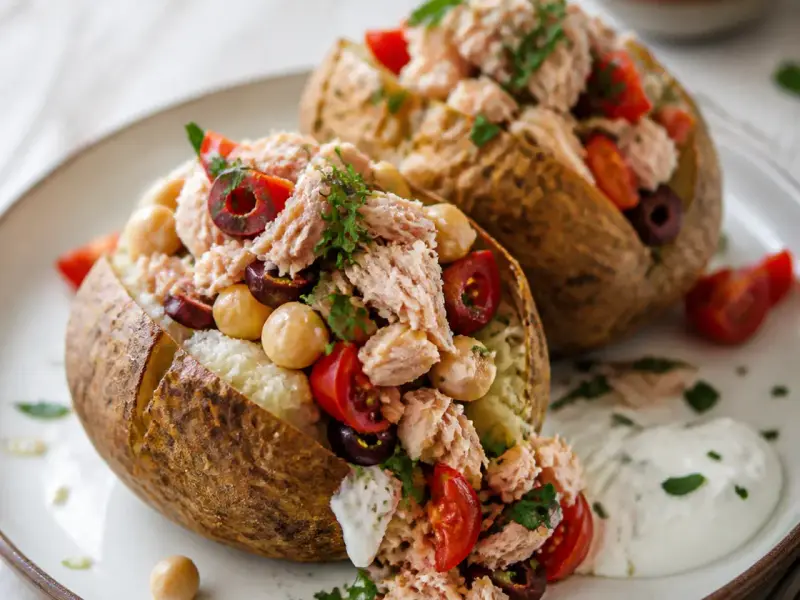
Mediterranean Tuna Stuffed Potatoes
Fluffy baked potatoes get filled with tuna, chickpeas, tomatoes, olives, and lemon yogurt.
Published · Updated
- Total time
- 30 min
- Serves
- 4
- Est. protein
- 26g
The recipe
Mediterranean Tuna Stuffed Potatoes
Ingredients
- 4 medium russet potatoes
- 2 (5-ounce) cans tuna in water, drained
- 1 (15-ounce) can chickpeas, rinsed
- 1 cup cherry tomatoes, quartered
- 1/3 cup sliced Kalamata olives
- 3/4 cup plain Greek yogurt
- 1 lemon, zested and juiced
- 2 tablespoons chopped parsley
- 1/2 teaspoon kosher salt
Contains: Fish, Milk
Instructions
- Pierce the potatoes with a fork. Microwave on high, turning halfway through, for 10–14 minutes, until tender.
- Combine the tuna, chickpeas, tomatoes, olives, half the yogurt, half the lemon juice, parsley, and salt.
- Stir the remaining yogurt with the lemon zest and remaining juice.
- Split the potatoes, fluff the centers with a fork, and fill with the tuna mixture. Top with lemon yogurt.
Food safety: Refrigerate the tuna filling within 2 hours and use within 3–4 days.
Leftovers: Refrigerate in a covered container for up to 3–4 days. Reheat hot components to 165°F before serving.
A pantry dinner that does not taste like one
Almost everything in this recipe is shelf-stable: potatoes, canned tuna, canned chickpeas, olives. The fresh additions are tomatoes, parsley, a lemon and a tub of yogurt. That makes it the dinner to cook on the night when the refrigerator is empty and the shop is closed, and the reason it does not taste like a compromise is acid.
Lemon appears twice, in two different roles. Half the juice goes into the tuna and chickpea filling, where it seasons the ingredients directly and keeps the canned flavor bright. The zest and the remaining juice go into the yogurt topping, which is sharper than the filling and provides the contrast that stops the dish from being one flat note of protein and starch.
Skip the lemon and you have tuna salad on a potato. Use it in both places and you have something that tastes deliberate.
The microwave is the right tool
Ten to fourteen minutes in the microwave versus an hour in the oven. For a weeknight, the microwave wins, and the difference in the interior of the potato is smaller than people expect — a microwaved russet is fluffy and steamy, it simply has soft skin instead of crisp.
Get the details right:
- Pierce each potato several times with a fork. This is not superstition; steam has to escape, and unpierced potatoes do occasionally burst.
- Turn them halfway through. Microwaves heat unevenly and an unturned potato cooks hard on one side.
- Test with a knife through the thickest part; it should slide in with no resistance. Underdone potato centers are unpleasant and cannot be fixed after filling.
- Let them stand two minutes before splitting. The interior is full of superheated steam, which will escape into your face if you cut straight in, and the resting time lets the flesh finish softening.
If you want crisp skin, microwave for eight minutes and finish in a 425°F oven or air fryer for ten. That is the best of both, at the cost of ten minutes.
Fluff, do not mash
Split each potato lengthwise and work a fork through the flesh to loosen it into fluffy strands, pushing gently from the ends to open the potato up. What you are doing is creating surface area for the filling to sit in and for the yogurt to soak into.
Mashing the flesh compacts it and makes it gluey. Russets are a high-starch potato, which is exactly why they fluff so well and exactly why they turn to paste when overworked.
Ingredient notes
Russet potatoes. High starch, low moisture, thick skin — the classic baking potato. Yukon Gold is waxier and stays denser; red potatoes are the wrong choice entirely. Choose potatoes of similar size or the small ones will overcook while the large ones are still hard.
Tuna. Two cans in water, drained thoroughly. This is the protein backbone of the meal and it should be broken into large flakes rather than mashed to paste.
Chickpeas. Rinsed. They add fiber, bulk and their own protein, and they keep the filling from being dominated by fish.
Kalamata olives. The salt and the funk. A third of a cup is enough to season the whole filling, which is why the added salt is only half a teaspoon.
Parsley. Flat-leaf, chopped. Not a garnish — in a dish made largely of cans it is one of the few fresh flavors.
Food safety, for once not boilerplate
Canned tuna mixed with yogurt and fresh vegetables is a perishable salad, and it needs to go into the refrigerator within two hours of being made. This matters more here than in most recipes on this site because the filling is not cooked after assembly; nothing is going to kill anything that grows in it.
Made and refrigerated promptly, the filling keeps three to four days.
Meal prep, which is where this shines
Make the filling on Sunday and keep it in a covered container. Microwave a potato on a weeknight, split, fluff, fill. Dinner is eight minutes of work with no cooking skill required, and the components stay good all week.
The filling is also useful on its own: in a pita, on toast, over greens, or scooped with crackers. Keep the yogurt topping in a separate small container so it stays thick.
Serving it
The potatoes are a full plate as written. If you want more on the table: a simple cucumber and red onion salad, steamed green beans with lemon, or a handful of arugula tucked into the split potato under the filling.
Questions people ask
Can I use sweet potatoes? Yes, and the sweetness plays well against the olives and lemon. They microwave in roughly the same time.
Can I bake the potatoes in advance? Yes — cook and refrigerate them whole, then reheat in the microwave for two to three minutes before filling. Baked potatoes should be refrigerated, not left at room temperature.
What can replace the yogurt? Tahini thinned with lemon and water makes the dish dairy free and pushes it further toward the eastern Mediterranean.
Can I use canned salmon? Yes, and it is excellent here. Drain it well and break it into large flakes the same way.
About the protein estimate26g per serving is an estimate based on standard ingredient data. Brands, substitutions, and portion sizes change the result. View the source.
More dinners like this
Cajun Chicken Corn Skillet
Cajun-spiced chicken, corn, peppers, and black beans cook together in a colorful 30-minute skillet.
Get the recipe
Ginger Beef Ramen Stir-Fry
Lean beef, broccoli slaw, and ramen noodles cook in a gingery soy sauce in 25 minutes.
Get the recipe
Sheet-Pan Beef Fajitas
Thin strips of beef, peppers, and onions roast quickly for colorful weeknight fajitas.
Get the recipe